How to Write a Thank You Note That Actually Lands
The difference between gratitude and a greeting card cliché
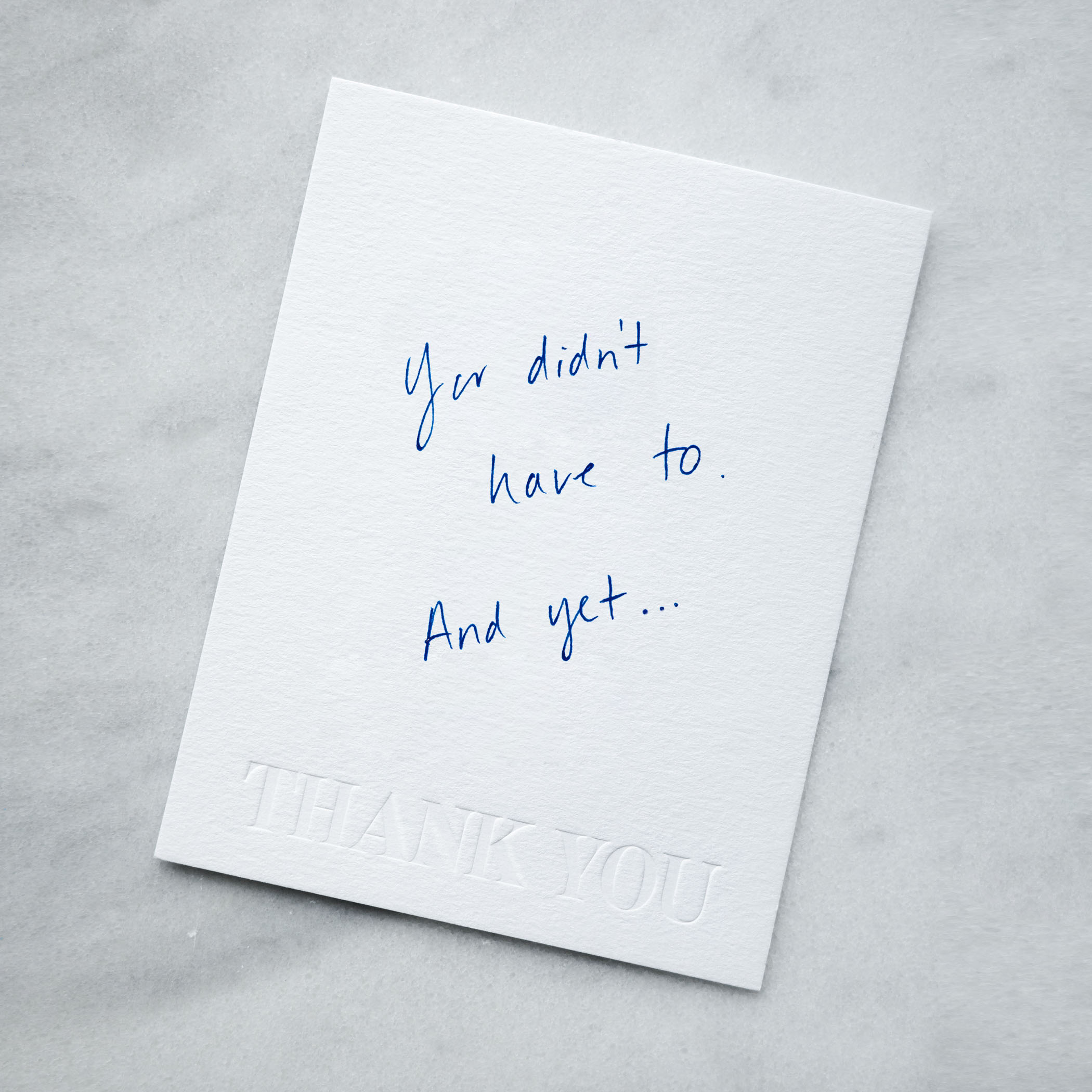
You know the ones. "Thank you so much for your generous gift." Written on autopilot, received on autopilot, recycled by Wednesday.
A thank you note that actually works — the kind someone keeps — does one thing differently. It makes the reader feel seen, not just acknowledged.
The distinction matters. Acknowledgment is transactional. You gave me something, I am confirming receipt. Seeing someone is different. It says: I noticed what you did, how you did it, and what it cost you.
Start with the specific.
Not "Thank you for the beautiful dinner" but "The fact that you made the risotto — standing over that pan for forty minutes when you'd been working all day — I noticed that."
Specificity is the whole game. It proves you were there, paying attention, not just present.
Say what it did to you, not just what they did.
"Thank you for the recommendation" is fine. "I started that book on the train home and missed my stop" is a thank you note. The best gratitude describes the effect, not the gesture. Let them see the ripple.
Name the effort, not just the outcome.
Anyone can thank someone for a gift. Fewer people thank someone for the thought behind it. "You remembered I'd mentioned that offhand, months ago" — that sentence does more than any superlative.
A good thank you note is a small, permanent record that someone mattered to you on a specific day for a specific reason.
Timing is a feature, not a bug.
A thank you note two weeks late lands differently than one sent the next morning. The next-morning note is polite. The two-week note says: I'm still thinking about it. Both are good. The late one might be better. Don't let the guilt of not writing immediately stop you from writing at all.
On handwriting.
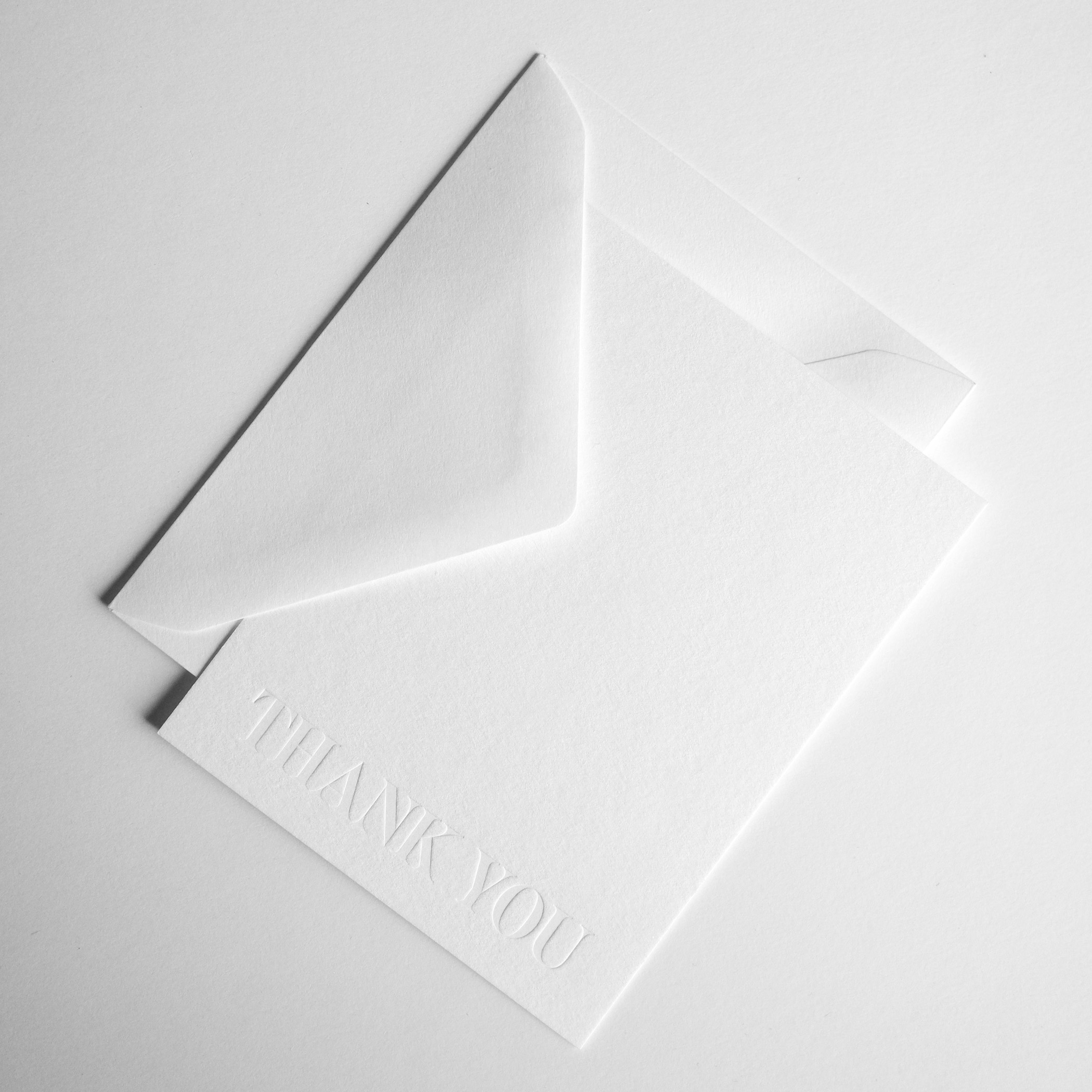
Yours doesn't need to be beautiful. It needs to be slow enough that the reader senses you took your time. A slightly imperfect hand on heavy cotton stock says more about your intention than any printed font. The pen hesitating over a word — that's not a flaw. That's the whole point.
Keep it short.
Three to five sentences. That's a thank you note. If you're writing more, you're writing a letter — which is also wonderful, but a different thing. The constraint of a card is what makes it powerful. You can't meander. You have to choose the one thing that matters most and say it.
What to avoid:
Don't apologize for the lateness in the note itself — it undercuts the gratitude. Don't use "just" ("just a quick note to say…") because nothing about a handwritten card is "just" anything. And don't sign off with "Thanks again." You said it. It's said. End with their name or a single warm line.
A good thank you note is a small, permanent record that someone mattered to you on a specific day for a specific reason. That's not a social obligation. That's one of the better things a person can do.